Basic capabilities for portal pages
Not all pages have all options and the meta data on the page will drive the options in search and filters.
-
Search - each page has type-ahead search capabilities (3 letters min).
-
Filter -
 , which expands to this when you hover over it, and to this when you click on it.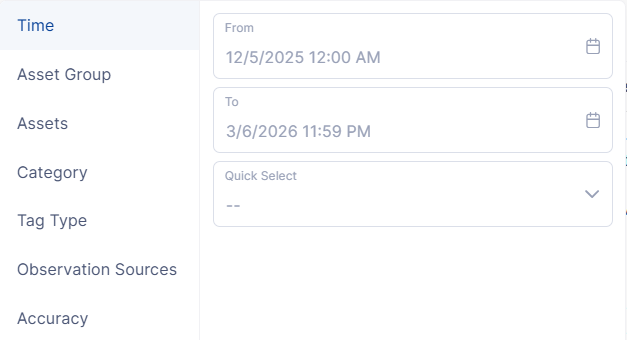
- Export to spreadsheet -
 , which expands to this
 , when clicked will create a spreadsheet of all data shown in the table.
 -
Sort - each column has an indicator and highlight in blue w number shows the default sort.
-
Resize column width - not all columns can be changed, but if you move to the edge and see a double bar with small arrow on each side, you can pull wider or smaller.
-
Reorder columns - not all tables support reordering, but if a hand is shown and grab it and pull it and top and bottom arrows will show you where it will be places when you let go.
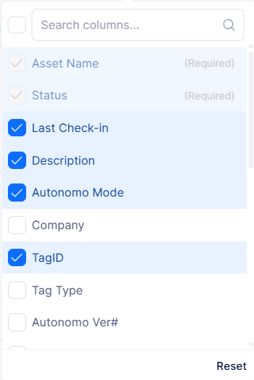
- Expose or hide columns - click on this icon
 and column mgr panel is presented. This shows you defaults, columns you can expose or hid and has a reset button.
- Data Pagination - to improve performance and help w focus meta data is presented in pages. You can set how many are shown on a page, then you can select or advance through the pages. Search, filter and sorts act on data across pages.



Asset details
There are 4 pages that provide this information
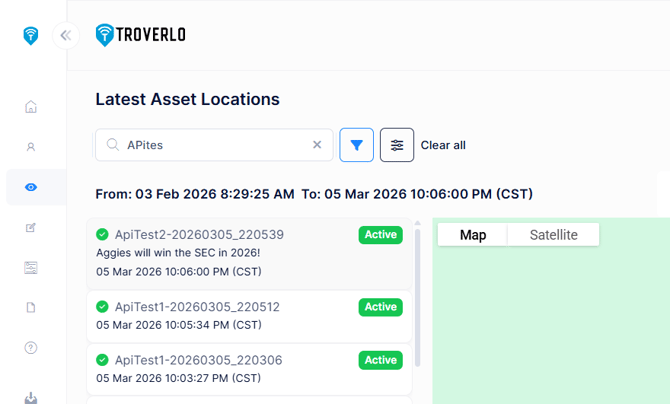
- Observations -> Latest Asset Location
- Tiles - are sorted from most recent to oldest.
- Asset name - which is active for you to hover over.
- Description if available.
- Timestamp of that observation data.
- Health indicator on the left.
- Good (location or check-in in the last 30 days),
 ;
; - Warn (location or check-in has been more than 30 days, but less than 60),
 ;
; - Critical ((location or check-in has been more than 60 days),
 .
. - Unknown (never checked in,
 )
)
- Good (location or check-in in the last 30 days),
- Status of the asset on the right (
 ,
,  ).
). 
- Tiles - are sorted from most recent to oldest.
-
-
- Pins on map
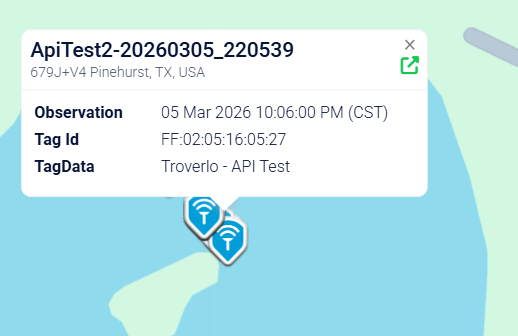
- Pins show the location of an Asset at a specific time/date
- If you click on a pin, more information is exposed.
- Pin info window
- Click on the tile and the pin will be enlarged to show observation details.
- Tag Data - is the value in the SSID. This Troverlo's patented payload mechanism for handling sensor data.
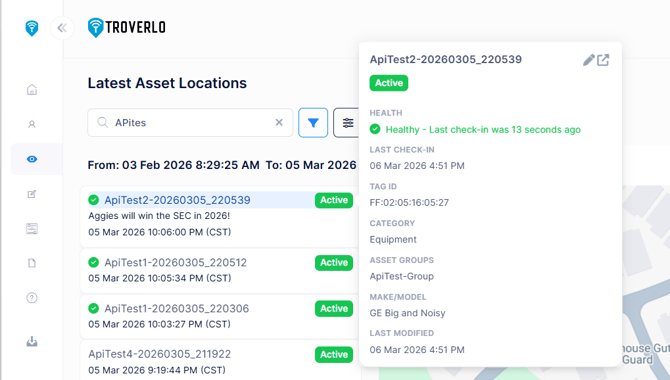
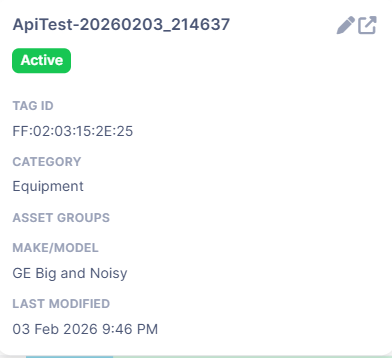
- Asset preview - hover over the Asset name and it will show the base details
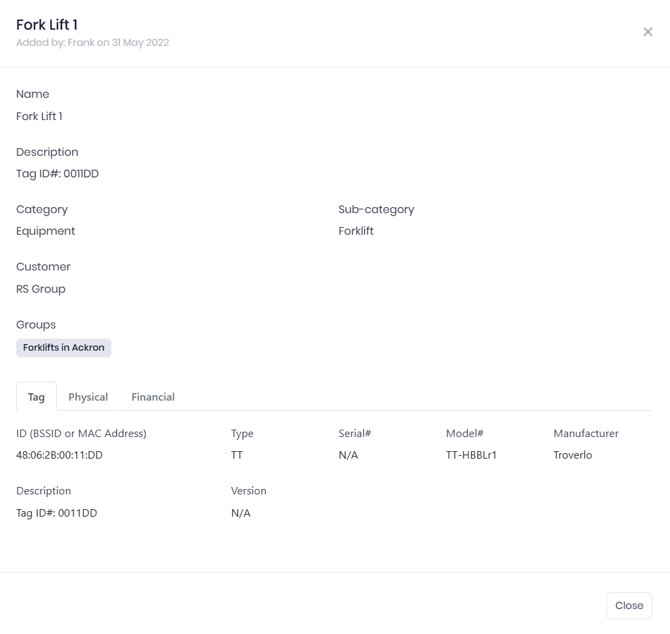
- Asset Details - on the Asset preview (see above) the first icon
 when clicked will open a modal w all the details. The modal has 4 tabs of meta data available.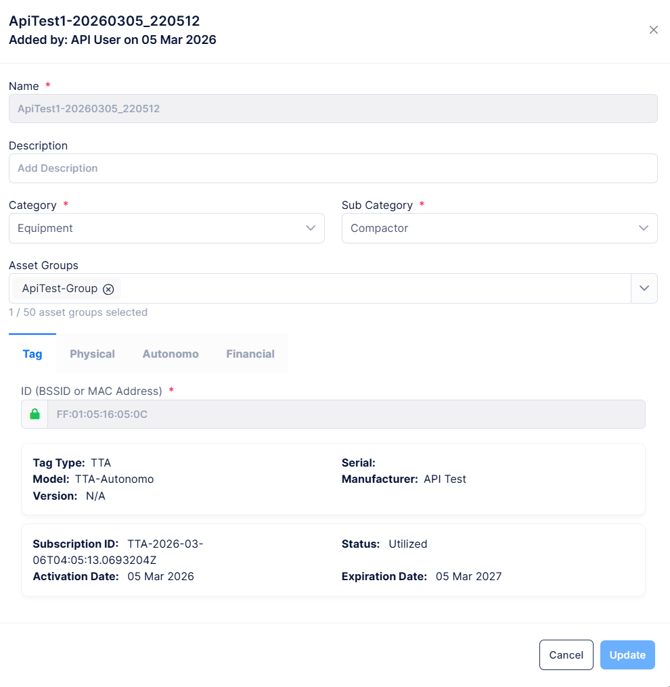
-
- Observations -> Latest Asset Observations
- Click on this icon
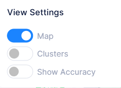
 , which will expand to show view settings
 - Turn off the map slider to expose this page
- Asset preview - hover over the Asset name and it will show the base details
- Asset Details - on the Asset preview (see above) the first icon which will open a modal w all the details. The modal has 4 tabs of meta data available.
- Table view
- Search, filter and export to spreadsheet capabilities empower to find desired meta data
- Sort column is not operational on this page
- Click on this icon
- Observations -> Asset Observation Details
- Asset preview - hover over the Asset name and it will show the base details
- Asset Details - on the Asset preview the first icon will open a modal w all the details.
- Pins on map
- Pins show the location of an Asset at a specific time/date.
- If you click on a pin, more information is exposed.
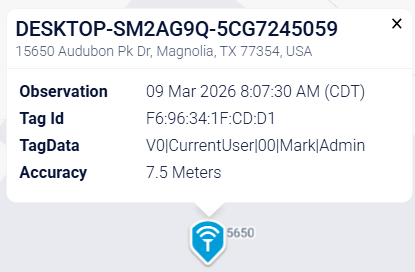
- Pin info window
- Click on the pin to show observation details.
- Tag Id is the MAC Address of the device.
- Tag Data - is the value in the SSID. This Troverlo's patented payload mechanism for handling sensor data.
- Asset preview - hover over the Asset name and it will show the base details
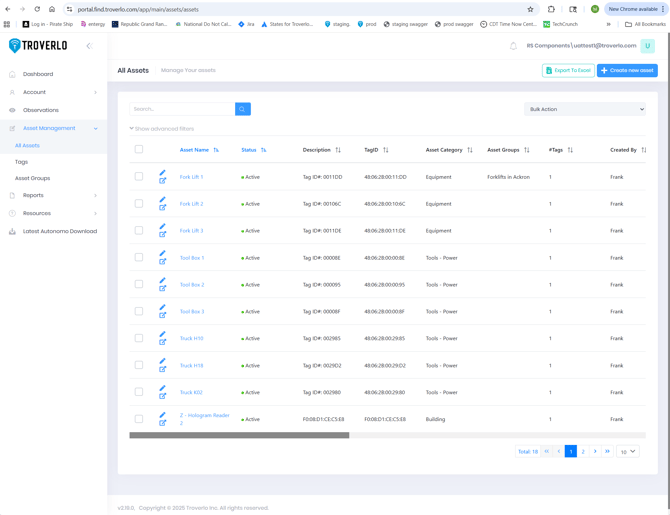
- Asset Management -> All Assets
- Asset preview - hover over the Asset name and it will show the base details
- Asset Details - on the Asset preview the first icon which will open a modal w all the details.
- Table view - Search, filter and export to spreadsheet capabilities empower to find desired meta data

Creating a new Asset
Autonomo based Assets
Autonomo is a service that auto-provisions an Asset in the Troverlo platform for the device it is installed on.
Add-on tags
Add-on tags provide location tracking for assets without Wi-Fi. They can be powered by USB or by battery. The tags are affixed to the Asset so they can be tracked. The tag advertises its location via Wi-Fi beacons. They do not report on themselves to the Troverlo platform. For a location to be determined for an Asset, it's tag must be detected by an a Troverlo Observation Endpoint (OE).
Navigation
Asset Management -> All Assets
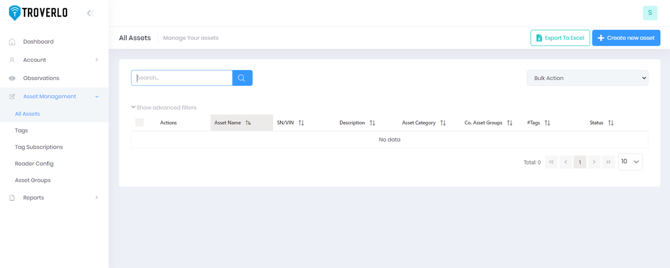
Steps
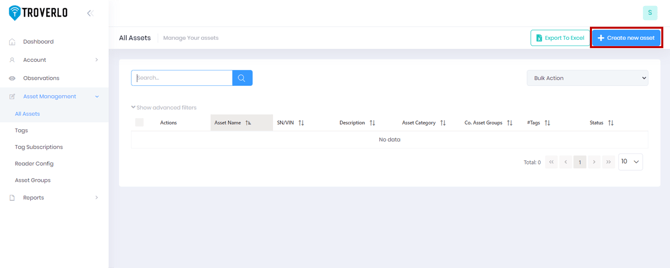
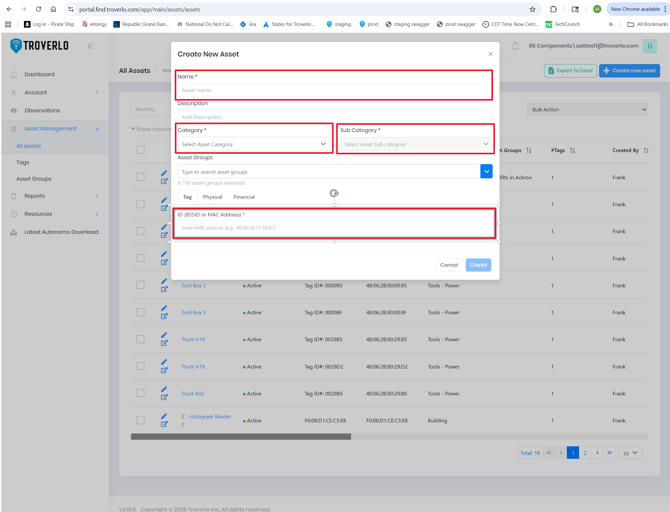
- In the top right corner, select Create new asset
-
Enter descriptive Asset information. Mandatory fields include Asset Name, Asset Category, Asset Sub-category, and Tag ID (BSSID or MAC Address).
- When you add a Tag to an Asset, more information about the tag will be presented.
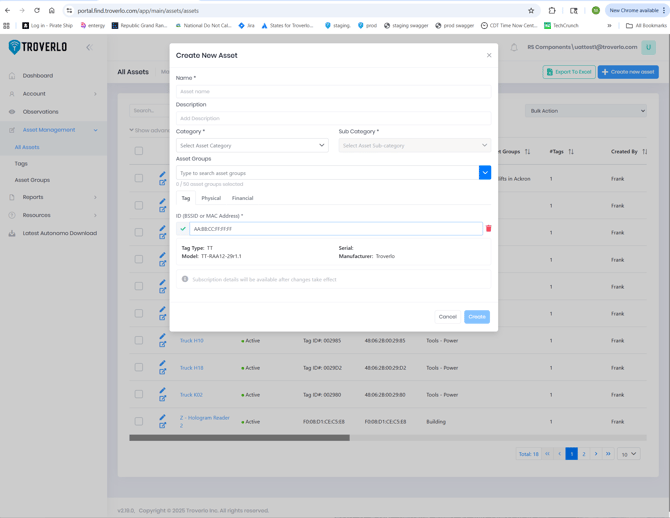
- If you want to use a different Tag, you can select the trash can icon to remove the previously selected tag.
- Once all relevant information is added, click Create.
-
- This will associate the Tag entered and associate the Subscription to the Asset.
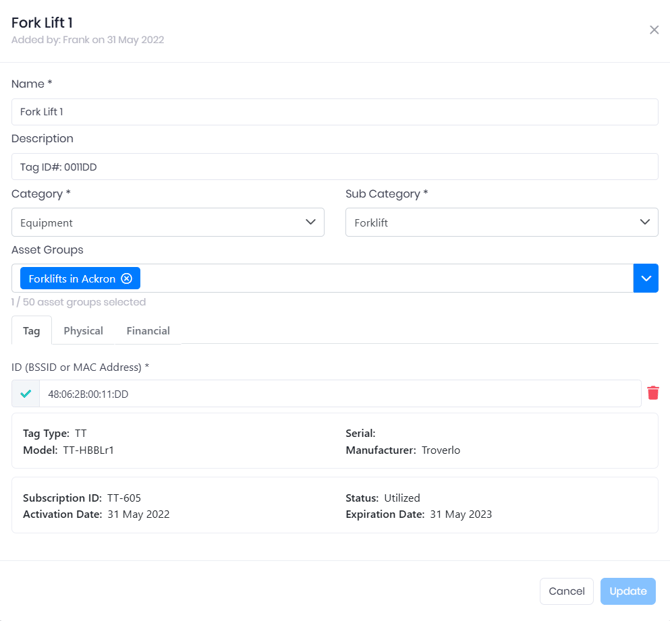
- This will associate the Tag entered and associate the Subscription to the Asset.
- This will also change the state of the Asset to "Active," the Tag to "Utilized" and the Subscription to "Utilized."
-
Editing an Asset
Navigation
Asset Management -> All Assets
Steps
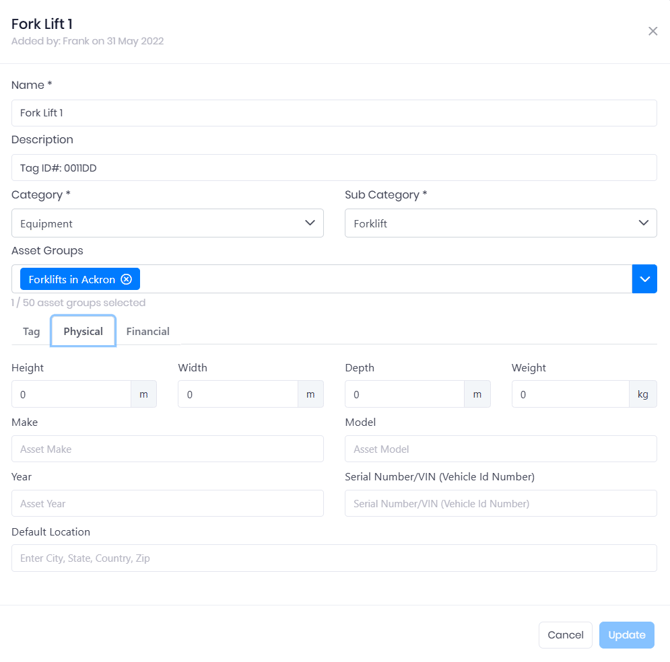
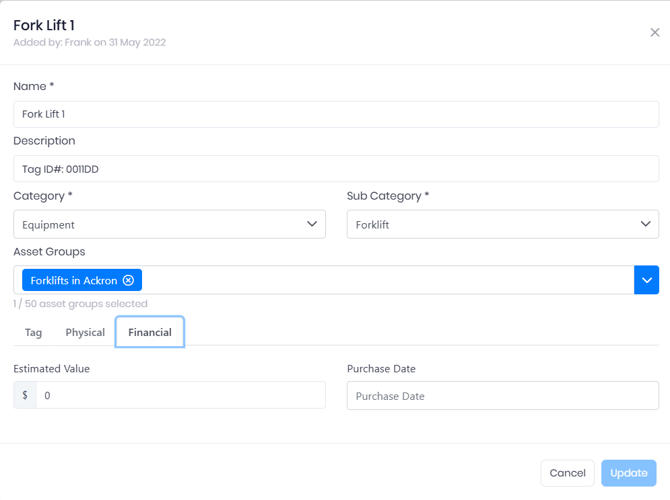
- Select the "pencil" icon - this will open a modal where you can edit any detail for the Asset
-
- If using physical tag
- There are 3 tabs to enter Asset details
- Tag details
- Physical details
- Financial details
- Tag details
- There are 3 tabs to enter Asset details
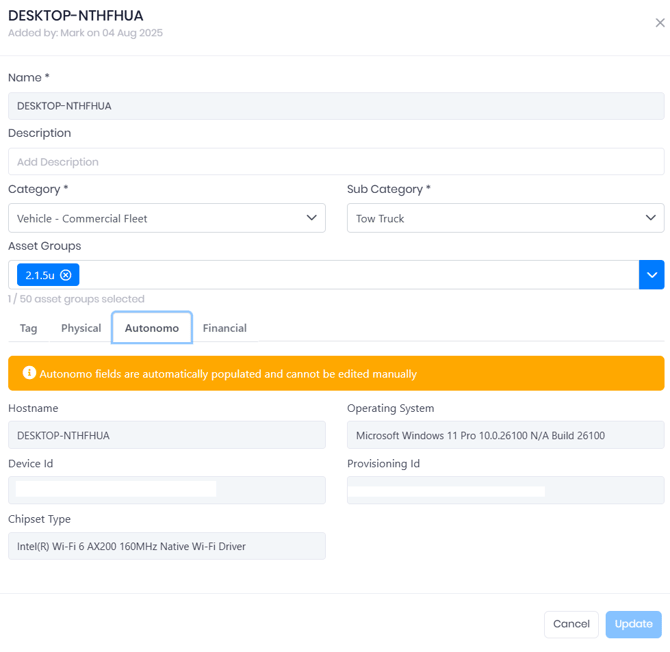
- If using Autonomo, there is a virtual tag and more details are shown about the Asset on the Autonomo tab
- If the Tag is removed, it will remove the Tag and the Subscription and change the state of the Asset to "Archived," the Tag to "Available" and the Subscription to "Available."
- There are two options when removing a Tag from an Asset
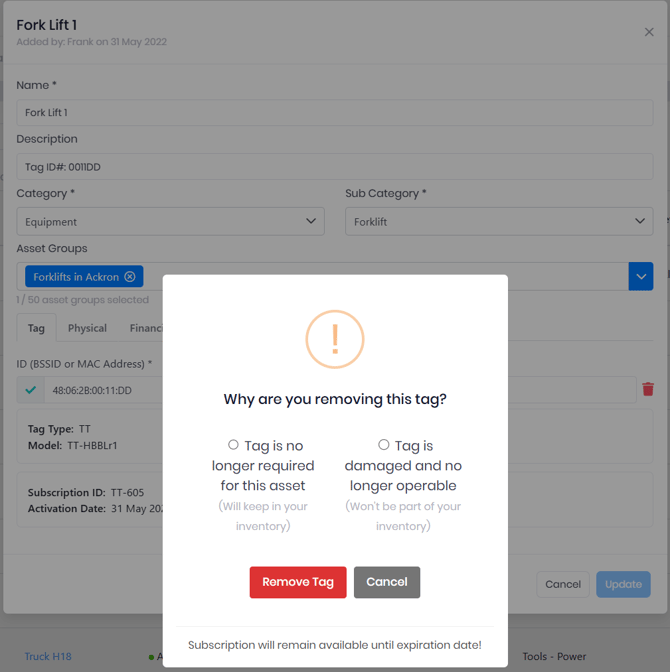
- The first option makes the Tag available for use on other Assets.
- The second option removes the Tag from the customer's purview, as it is no longer operational.
- There are two options when removing a Tag from an Asset
- A new/different Tag can be added to an Asset in the "Archived" state and a Subscription of that Tag Type will also be associated when the Asset is saved.
- When done, select Update to capture the changes in the Troverlo platform.
- This will close the modal and present an updated list of all the company's Assets